
The Boater's Guide to Islamorada: Where to Dock, Fish, and Stay
If you're planning a Florida Keys trip around your boat, Islamorada is where you want to be. The Upper Keys sit at the convergence of Florida Bay and the Atlantic — backcountry flats on one side, open ocean access on the other — and the fishing grounds surrounding Islamorada are as good as it gets anywhere on the Eastern Seaboard.
What's less obvious from the outside is where to actually stay when you bring your vessel. Most hotels in the area have no marina facilities at all. Public ramps exist, but they mean early mornings hauling your trailer across town and competing for ramp space during peak season. For a fishing trip, that's not ideal.
This is the guide we'd want to have read before our first boating trip to Islamorada — covering the water, the fishing, the landmarks worth knowing, and what to look for in a place to stay.
The Water Around Islamorada
Islamorada's position at MM 80–90 on the Overseas Highway makes it a remarkably versatile base for boaters. Two very different fisheries are accessible within minutes of the right marina.
Florida Bay and the Backcountry
On the bayside, Florida Bay opens up into miles of shallow backcountry water. A mosaic of grass flats, channels, tidal creeks, and mangrove islands that defines the Upper Keys fishing experience. This is the domain of the flats, where permit, bonefish, and tarpon are stalked on foot or by pushpole in water so clear you can see the fish before you cast.
The backcountry is also where you'll find Lignumvitae Key, a state botanical site accessible only by water, and quiet anchorages that feel entirely removed from the Overseas Highway a few miles away.
Ocean Access via Snake Creek
Snake Creek, just north of Upper Matecumbe Key in Islamorada, connects Florida Bay to the Atlantic, giving bayside-based boaters a straightforward route to offshore water without a long run. From there, the reef line and open Atlantic fishing grounds are within easy reach for mahi-mahi, sailfish, wahoo, and bottom fishing over the patch reefs.
The Islamorada Sandbar
No boating guide to Islamorada is complete without mentioning the sandbar. A shallow, social stretch of water in the bay where boaters raft up on weekends, wade in flat water, and experience the kind of spontaneous Keys afternoon that makes people want to come back every year.
What's Biting in May
May is one of the most exciting months on the Islamorada fishing calendar.
Tarpon are the headliner. These migratory giants — fish pushing 100 pounds or more — move through the Keys each spring, and May sits squarely in peak season. The tarpon tournaments that define Islamorada's spring calendar (the Golden Fly Invitational runs May 18–20 this year; the Don Hawley follows in early June) draw some of the most accomplished fly anglers in the country. You don't have to be competing to appreciate what's happening on the water.
Permit are active on the flats through spring. Sight fishing for permit — notoriously technical, enormously satisfying — is at its best when the water is clear and calm, which spring conditions in the bay reliably deliver.
Mahi-mahi are running offshore through May and into summer, accessible via Snake Creek for anglers looking to mix a bay day with an offshore morning.
Snapper and grouper are reliable year-round on the patch reefs and nearshore wrecks.
If you're planning a trip around a specific species, local guides are worth the investment — particularly for backcountry tarpon and permit, where local knowledge of tides, flats, and fish movement makes a significant difference.
What to Look for in a Marina Resort
When boaters start researching Islamorada stays, the same questions come up:
- Is dockage included in the room rate, or billed separately per foot?
- Is the ramp private or shared with the public?
- Is trailer parking on site?
- How far is the dock from the room?
- Is it a guest-only marina, or are you sharing space with transient traffic?
These details matter more than they might seem. A per-foot slip fee adds up quickly over a week's stay. A public ramp means competing for access. No trailer parking means finding somewhere to store it off-site. These are friction points that shape the entire experience of a boating trip.
Kon Tiki Resort is built specifically around eliminating those friction points.

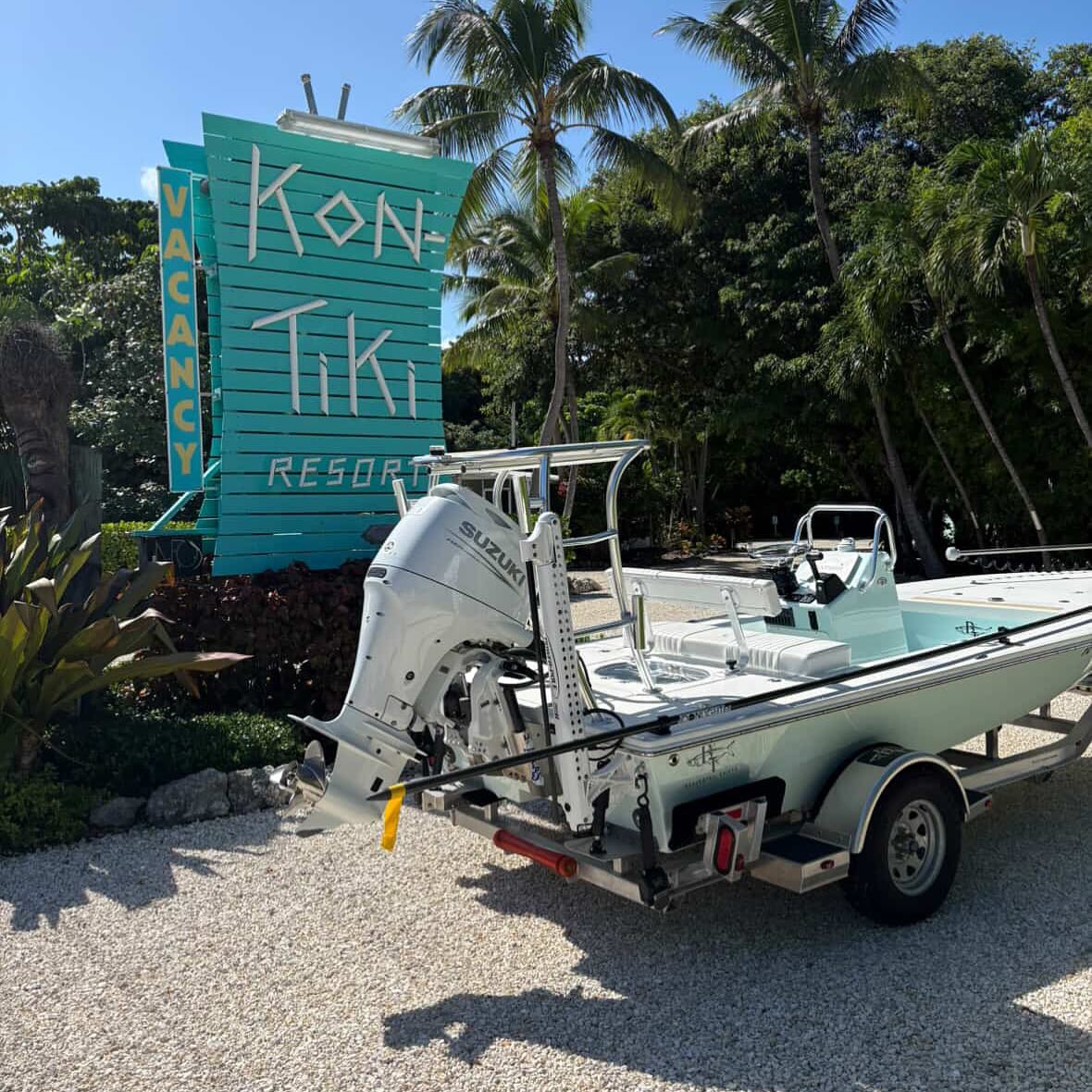
The resort's private marina — reserved exclusively for guests — includes complimentary dockage for boats up to 24 feet, a private on-site boat ramp, free trailer parking, water and electrical at the dock, and a fish cleaning table. One boat per cottage, first-come first-served. When the dock fills up, guests typically raft together — it's a normal part of the small-marina experience and one of those organic moments that tends to generate the best fishing conversations.
The marina sits directly on Florida Bay. Lignumvitae Key, the Islamorada sandbar, and Snake Creek's ocean access are all a short run from the dock. You can be on the water at first light and back for breakfast without the logistics of trailering to a public ramp.
The cottages are steps from the water. Walk out in the morning, cast off, and go. Come back for lunch. Head out again. Return at sunset. That rhythm — which is the whole point of a boating trip — is what the setup at Kon Tiki is designed for.
Don't Take Our Word for It
Sean from Afterwork Fish Club has been coming to Islamorada for several years and stumbled onto Kon Tiki while solving the exact problem most boaters face down here — finding a place that handles the boat without making you work for it.
The part that stuck with us: "In the past, we've tried so many different locations where we have a place to keep our boat, but it's going to cost $20 to $50 a night — and then we find out there's no ramp nearby, so we have to drive about 20 minutes away to get the boat in the water, and one guy has to drive the trailer back while the other guy goes by himself in foreign waters. It's doable. Everybody's done it. But it's not ideal."
That's the friction that kills a fishing trip before it starts. The video is worth six minutes of your time if you're on the fence.
Planning Your Trip
A few practical notes for boaters visiting Islamorada:
Tides matter on the flats. The backcountry is shallow, and fishing the flats on the wrong tide can be a frustrating experience. Download a local tide chart before you arrive and plan your days around the water rather than against it.
Snake Creek is your ocean access. If you're bayside and want to get to the Atlantic, Snake Creek is the bridge cut that connects them. Know where it is before you leave the dock.
Fishing licenses are required. Florida saltwater fishing licenses are available online through the Florida Fish and Wildlife Conservation Commission. If you're hiring a guide, they typically cover you under their captain's license — confirm before you go.
May is tournament season. The Golden Fly (May 18–20) and other spring tournaments concentrate guides and local boats on the water. If you're not participating, be courteous around the tournament areas and give anglers space on the flats.
Book early. Spring availability at marina-access properties in Islamorada fills ahead of what most guests expect, particularly around tournament weekends.
The Practical Details at Kon Tiki
- Location: MM 81 Bayside, Islamorada — 81200 Overseas Highway
- Dockage: Complimentary, guest-only
- Max boat length: 24 feet overall
- Boat ramp: Private, on-site
- Trailer parking: Free, on-site
- Dock amenities: Water, electric, fish cleaning table
- Vessels not permitted: Jet skis, wave runners, pontoon boats
- One boat per cottage unit
For marina questions or to discuss your specific setup before booking, contact the resort directly at 305.664.4702 or mail@kontiki-resort.com.
Kon Tiki Resort is a locally owned boutique property on Florida Bay in Islamorada, offering 23 bayside cottages, a private guest-only marina with complimentary dockage, and direct access to the backcountry and offshore waters of the Florida Keys.